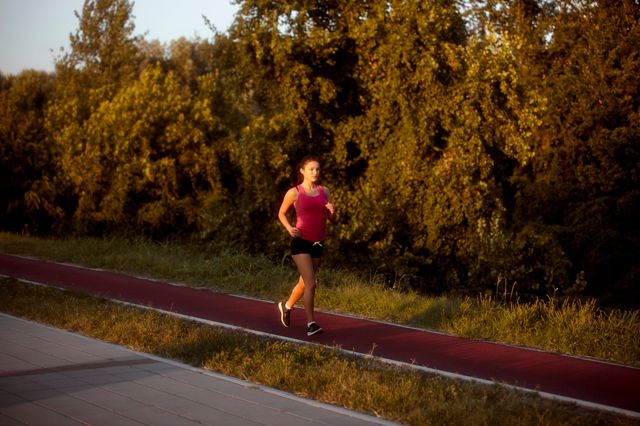
Eating well before and after a long run
The weekend long run is the cornerstone of endurance. But without the right fuel, watch out for the slump at kilometre 15! What to eat the day before, in the morning, during the effort and afterwards, to run better and recover faster.

A successful long run starts on your plate… the day before.
Beyond an hour of running, the body draws heavily on its carbohydrate stores, held as glycogen in the muscles and liver. When these stores run out, your pace drops and your legs feel heavy: the famous "wall". Eating well around your long run helps you avoid it, and also recover better for the following week.
The day before: a normal meal, a little richer in starchy foods
No need for a giant "pasta party". For a run of 1 h 30 to 2 h 30, a balanced dinner with a slightly bigger portion of starchy foods than usual is enough: pasta, rice, potatoes, quinoa, bread.
- Add cooked vegetables and a source of protein (fish, eggs, poultry, pulses).
- Avoid very fatty or spicy dishes, or foods you do not digest well: your night and your run will be more comfortable.
- Drink regularly during the day. Alcohol, on the other hand, dehydrates and disturbs sleep: save it for another occasion.
In the morning: eat early and light
Ideally, have your breakfast 2 to 3 hours before you set off. That is the time it takes to digest without your energy dipping.
A few ideas that work well:
- bread or oat flakes, a little honey or jam, a banana;
- a yoghurt or fromage blanc if you digest it well;
- tea, coffee or a big glass of water.
If you run early and cannot eat that long beforehand, have a light snack 30 to 60 minutes before: a banana, a few plain biscuits or a fruit purée are enough.
Never test a new food on race day: the training long run is exactly where you find out what works for you.
During: drink and eat from the first hour
For runs of less than an hour, water is enough, and in cool weather you can often do without it.
Beyond that, plan to:
- drink small sips, regularly, according to your thirst and the weather;
- take in carbohydrates from 45 minutes to 1 hour of effort, then every 30 to 45 minutes: fruit jellies, dried fruit, cereal bars, energy gels or a sports drink.
For long runs of more than 2 hours, sports nutrition specialists recommend around 30 to 60 grams of carbohydrates per hour, roughly one and a half bars or gels. Your gut also needs training: start with small amounts and increase gradually.
After: the 2-hour window
This is when the muscles rebuild their stores most easily. In the two hours that follow, focus on:
- Water, to make up for losses. Water rich in bicarbonates or a salty broth helps after a run where you sweated a lot.
- Carbohydrates, to refuel: bread, rice, pasta, fruit.
- Protein, to repair muscle fibres: eggs, dairy, fish, meat, tofu, pulses.
A full meal does the job perfectly. If your next meal is still a long way off, a bridging snack helps: a glass of chocolate milk, a yoghurt with a banana, peanut butter on toast.
A few menu ideas
- The day before: salmon, brown rice, pan-fried courgettes, fruit purée.
- In the morning: porridge with oat flakes, a banana and a spoonful of honey, tea.
- During: a bottle of water and two fruit jellies.
- After: omelette, oven-baked potatoes, salad, fromage blanc and red berries.
Special cases
If you follow a particular diet, are diabetic or have digestive problems during exercise, get support from a doctor or sports dietitian: needs can differ greatly from one person to another.
In short
A slightly richer evening meal, an early breakfast, water and carbohydrates during runs of more than an hour, then a proper recovery meal: with this routine, the long run becomes a pleasure… and the wall stays far away!
Sources
- Thomas D. T., Erdman K. A., Burke L. M., "Nutrition and Athletic Performance", joint position statement of the American College of Sports Medicine, the Academy of Nutrition and Dietetics and Dietitians of Canada, Medicine & Science in Sports & Exercise, 2016.
- Burke L. M. et al., "Carbohydrates for training and competition", Journal of Sports Sciences, 2011.
- Programme national nutrition santé (French national nutrition programme), dietary guidelines, mangerbouger.fr.
nutritionlong runrecoveryhydration