Runner's knee: recognising and preventing the two most common pains
Pain on the outside of the knee or around the kneecap? Iliotibial band syndrome and patellofemoral pain syndrome are the two classic runner's knee problems. How to recognise them, why they happen and how to prevent them.
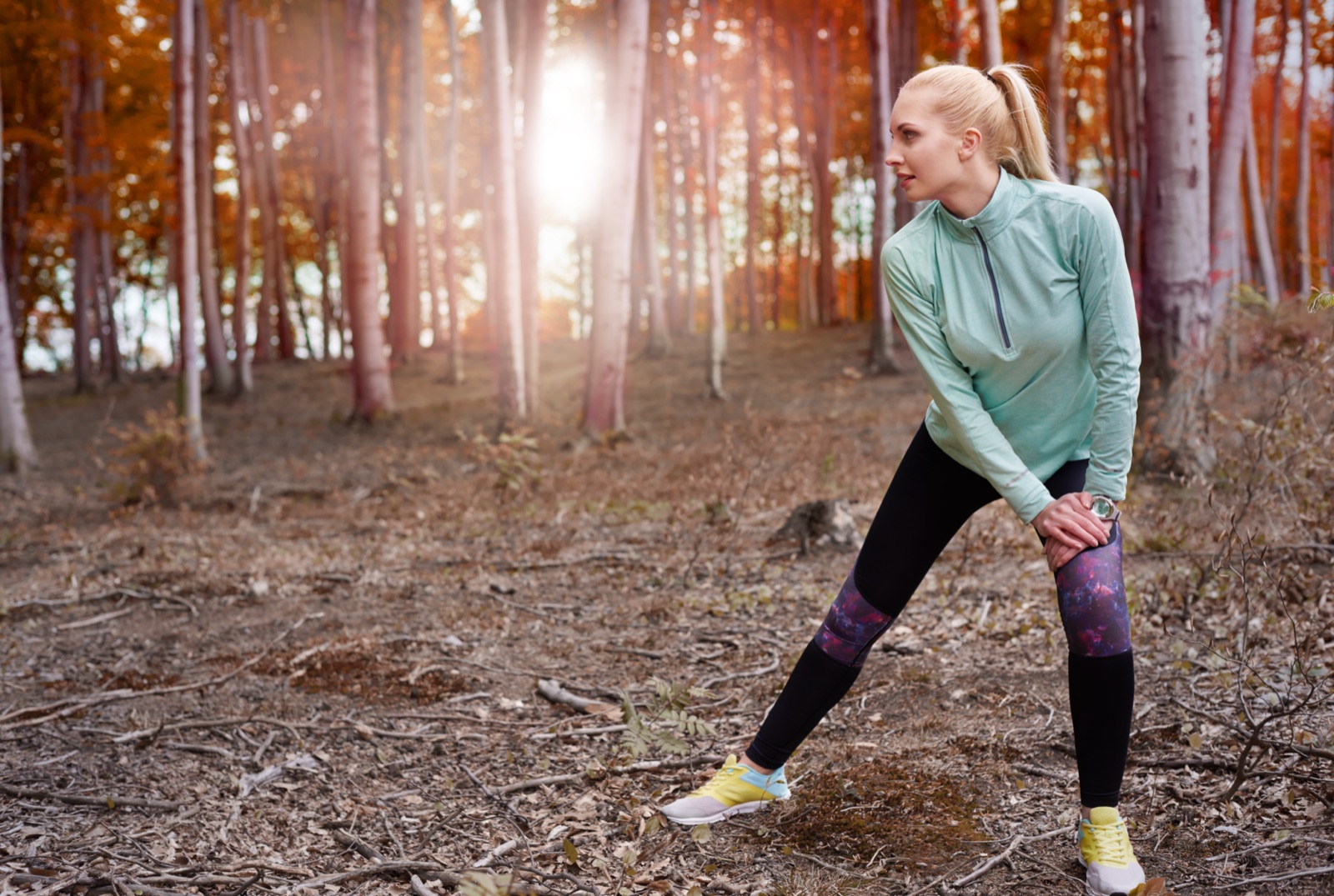
The knee is rarely the real culprit: it often pays the price for training load that rose too fast, lazy hips or an ill-suited stride.
The knee is the joint most often affected in runners. Of all the possible pains, two come up again and again: iliotibial band syndrome, and patellofemoral pain syndrome, the pain around the kneecap. The good news: in the vast majority of cases, they heal well, provided you listen to them early.
This article gives general guidance. It does not replace the advice of a doctor or physiotherapist, whom you should see as soon as pain lasts or gets worse.
Iliotibial band syndrome
Where does it hurt? On the outside of the knee, a little above the joint. The pain often appears after a certain amount of running, always at about the same point, then becomes nagging until you have to stop. It disappears at rest and comes back on the next run.
Why? The iliotibial band is a fibrous band running from the hip down to the shin. When it is overloaded, it becomes irritated where it passes over the bony bump on the outside of the thigh bone. It often appears:
- after a sudden increase in mileage or elevation;
- with a lot of downhill running, or always running on the same side of a cambered road;
- when the gluteal muscles, especially the gluteus medius, lack the strength to stabilise the hip.
Patellofemoral pain syndrome
Where does it hurt? Around or behind the kneecap, in a diffuse way. The pain flares up on stairs (especially going down), when squatting, or after sitting for a long time with your knees bent: the famous "cinema sign".
Why? The kneecap slides in a groove at the front of the thigh bone. When the joint receives more stress than it can handle, it becomes sensitive. The most common causes:
- a training load that increases too quickly;
- quadriceps and hips that lack strength;
- an overly long stride, with the foot landing far in front of the body.
The first good reflexes
If pain appears:
- Do not force it. Running "through" the pain is the best way to make it last for weeks.
- Reduce the load rather than stopping completely: shorter runs, flat ground, slower pace. Cycling, swimming or the cross-trainer often let you keep fit without pain.
- Ice the area for 15 minutes after exercise if it helps.
- See a professional if the pain lasts more than one to two weeks, if the knee swells, locks or gives way, or if the pain appears at rest or at night. A sports doctor or physiotherapist can confirm the diagnosis and suggest a suitable programme.
Prevention: the four pillars
1. Reasonable progression
Most knee pain follows a period of doing "too much, too soon": a new training plan, getting back after the holidays, preparing for a race. Increase your volume in steps, with an easier week every three or four weeks.
2. Strong hips and thighs
Strength training is the most effective weapon against both syndromes. Two 15-minute sessions a week are enough to start:
- glute bridge: lying on your back, knees bent, lift your pelvis while squeezing your glutes, hold for 3 seconds, lower. 3 sets of 12;
- side-lying leg raises: lying on your side, lift your top leg straight, without rolling your pelvis. 3 sets of 15 on each side;
- wall sit: back against the wall, thighs horizontal, or a little higher if it hurts. 3 × 30 seconds;
- step-ups: step up slowly onto a step, keeping your knee in line with your foot. 3 sets of 10 per leg.
Your knee should always stay in line with your foot, without collapsing inwards.
3. A slightly shorter stride
Shortening your stride slightly and increasing your cadence a little, that is, taking smaller but more frequent steps, reduces the load on the knee. No need to change everything: an increase of 5 to 10% is enough, introduced gradually.
4. Vary surfaces and shoes
Alternate tarmac, paths and tracks. On roads, change sides so you do not always run on the same slope. Replace your shoes when the cushioning is worn out, often between 600 and 1,000 km depending on the model and your build.
What about stretching?
Stretching the iliotibial band or the quadriceps often feels good, but is not enough to heal these pains. Keep it as part of your cool-down and focus above all on strength training and managing your load.
In short
Knee pain is a message, not a fate. Listen to it early, ease off your training, strengthen your hips and thighs, and get support if it sets in. With a little patience, you will come back stronger than before.
Sources
- Crossley K. M. et al., "2016 Patellofemoral pain consensus statement from the 4th International Patellofemoral Pain Research Retreat", British Journal of Sports Medicine, 2016.
- Lavine R., "Iliotibial band friction syndrome", Current Reviews in Musculoskeletal Medicine, 2010.
- Assurance Maladie (French national health insurance), information on knee pain and when to see a doctor, ameli.fr.
kneeinjurypreventionstrength training