
Varying your pace: 6 sessions to improve
Always running at the same pace is comfortable… but you end up stagnating. By alternating easy runs, threshold work, intervals and hills, you improve faster and enjoy it more. Here are six simple sessions to add to your week.
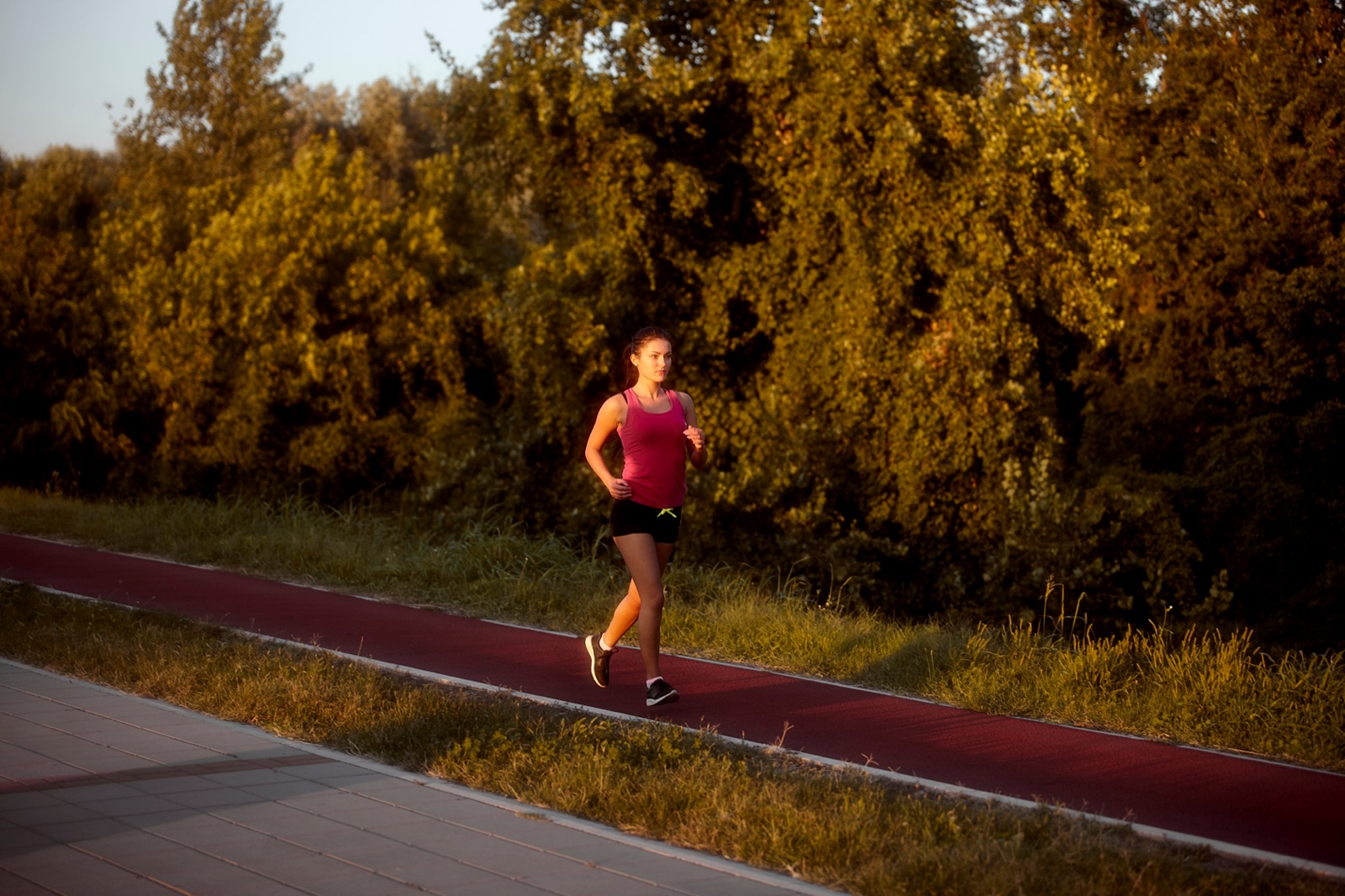
The body improves when you surprise it a little… and then give it time to recover.
Many runners always run at the same pace: a little too fast to be truly easy, a little too slow to be truly effective. As a result, fatigue builds up and progress plateaus. Yet research on endurance athletes shows a fairly consistent recipe: a large majority of easy training, around 80%, and a small share of harder sessions. Here is how to apply it, even with two or three runs a week.
Finding your paces without any equipment
No need for a heart-rate monitor to start. Go by your breathing and your ability to talk:
- Easy pace (endurance): you can hold a full conversation. This is the foundation of everything.
- Steady pace (threshold): you can say a few words, but not a whole sentence. It is a pace you could hold for about an hour in a race.
- Fast pace (VO2max): talking becomes impossible. You can only hold it for a few minutes.
If you know your maximal aerobic speed (MAS), easy running is about 65 to 75% of it, threshold 80 to 88%, and short intervals 95 to 105%.
The 6 sessions
All start with 15 to 20 minutes of easy jogging and a few drills (high knees, butt kicks, progressive strides). All end with 10 minutes of cool-down jogging.
1. The easy endurance run
40 to 60 minutes at an easy pace. This is the most important session, and the one most often botched by running too fast. It develops the heart, the capillaries and muscular endurance. It should make up the majority of your runs.
2. Strides
At the end of an easy run, 6 to 8 accelerations of 80 to 100 metres, building up gradually to a fast but relaxed pace, with a walk back. They improve your stride and prepare you for harder sessions, without fatigue.
3. Short intervals (30/30)
2 sets of 8 to 10 × 30 seconds fast / 30 seconds jogging, with 3 minutes of recovery between sets. This classic session works your VO2max while remaining accessible. Run fast but evenly: the last repetition should look like the first.
4. Long intervals
5 × 3 minutes at a steady pace, close to your 10 km pace, with 2 minutes of jogging between each. More demanding, it teaches the body to hold a high pace for longer.
5. Threshold tempo
2 × 10 minutes at threshold pace, with 3 minutes of recovery, or 20 minutes in one go once you are comfortable. It is the key session for the half marathon and the 10 km: it pushes back the moment your legs start to "burn".
6. Hills
Find a steady hill of about 100 to 200 metres. 8 to 10 dynamic climbs of 30 to 45 seconds, jogging back down to recover. Hills strengthen the calves, thighs and glutes and improve your stride without the impact of fast running on the flat. In winter, it is the ideal session when the track is slippery.
How to organise them
- 2 runs a week: one easy run (session 1) and one session alternating from week to week between 2, 3 and 6.
- 3 runs a week: two easy runs, one of them with strides, and one quality session (3, 4, 5 or 6).
- 4 runs or more: never more than two hard sessions a week, at least 48 hours apart.
Keep an easier week every three or four weeks: it is during recovery that the body adapts and improves.
Mistakes to avoid
- Running your easy runs too fast: you arrive tired for the important sessions.
- Starting the first repetitions too hard and falling apart at the end.
- Doing two hard sessions in a row.
- Going back to intervals after a break without a few weeks of easy running first.
If you are in pain, ill or very tired, replace the hard session with an easy run or rest. If you are taking up sport after a long break or have health problems, check with your doctor first.
In short
Plenty of easy, a little hard, and recovery: by varying your paces, you improve faster, get injured less and your runs become more fun. Pick one session this week and tell us in the group how it went!
Sources
- Seiler S., "What is best practice for training intensity and duration distribution in endurance athletes?", International Journal of Sports Physiology and Performance, 2010.
- Billat V., "Interval training for performance: a scientific and empirical practice", Sports Medicine, 2001.
- Fédération française d'athlétisme (French athletics federation), resources on running training, athle.fr.
trainingintervalsVO2maxprogress

